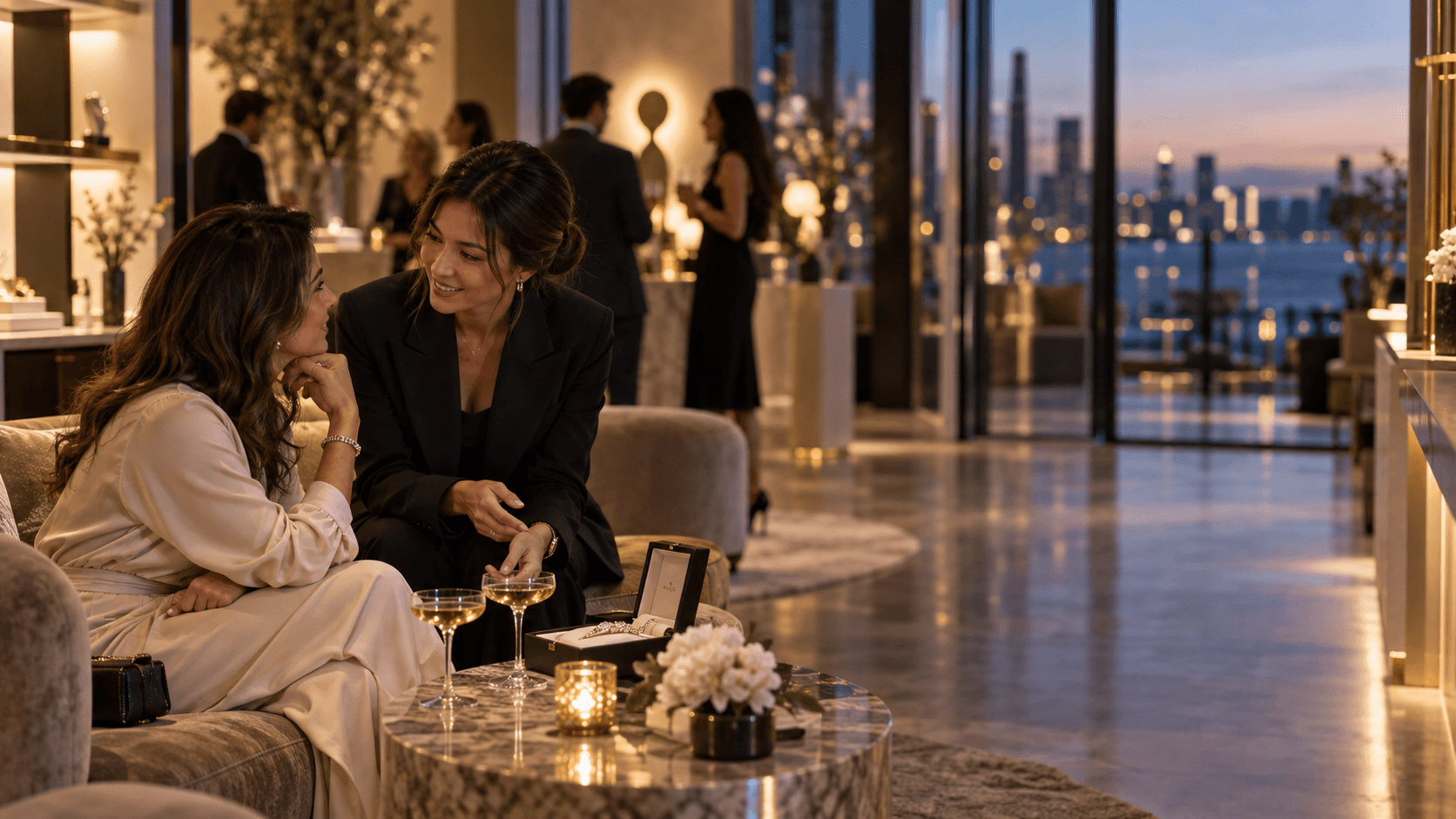
Walking into a luxury boutique for the first time can feel like entering a different set of rules. The pace is slower. The service is more attentive.
And the level of personalization, when done well, can feel almost theatrical in its warmth.
That experience doesn’t happen by accident. It’s the result of careful choreography: from how associates are trained to how appointments are structured, how products are presented, and how the store itself is designed to slow a client down and draw them in.
For first-time visitors, knowing what to expect removes the anxiety and lets the experience actually land. For brands, understanding what clients anticipate, and often fear, is what allows them to design a service that converts appointments into relationships.
Key Takeaways
What Every First-Time Boutique Visitor Should Know. ### Appointments Are a Service, Not a Formality
How Luxury Boutiques Design the In-Store Experience. Luxury stores are deliberately designed to create a different pace.
Spatial Design Slows the Client Down. Luxury stores are deliberately designed to create a different pace.
Product Presentation Tells a Story. In luxury retail, how something is presented is as important as what it is.
Private Appointments Create a Different Emotional Register. When a brand offers a private appointment, a room, an associate dedicated solely to that client, a curated selection prepared in advance, it creates an entirely different emotional experience.
What Every First-Time Boutique Visitor Should Know
1. ### Appointments Are a Service, Not a Formality
Most luxury boutiques now offer, and increasingly encourage, appointments, not because they want to limit access, but because a booked visit allows the team to prepare. Associates can review a client’s history, pull relevant pieces, and create an experience that feels considered rather than improvised.
Walk-ins are almost always welcome, but an appointment signals to the boutique that the client deserves a dedicated block of time and undivided attention. That shift in service quality can be dramatic.
1. ### The Best Associates Are Guides, Not Salespeople
A strong luxury sales associate does not push. They listen, ask questions, and guide the client toward products that genuinely fit, drawing on knowledge of the collection, of the client’s style, and of what has resonated with similar clients in the past.
This approach is what separates clienteling from selling. The associate’s goal is not the transaction; it is the relationship that brings the client back for the next one.
1. ### Boutique Service Protocols Vary by Brand
Some brands offer private rooms for high-value appointments. Others create an intimate atmosphere across the entire floor. Some serve champagne or tea; others focus purely on the product presentation.
The specific rituals vary, but the underlying intention, making the client feel that their time and attention are valued, is consistent across the highest-tier experiences.
Clients who visit multiple brands will notice these differences. The brands that stand out are the ones whose service creates a memory, something specific to them, not a generic interaction that could have happened anywhere.
1. ### Styling and Curation Are Part of the Experience
A boutique visit at the luxury level often includes creative guidance. Associates may pull pieces the client hasn’t seen, suggest pairings, or offer honest opinions on fit and proportion. This is the styling dimension of the experience, and it’s a meaningful differentiator from buying online or in a department store environment.
Clients who experience genuine styling often buy more than they planned, not because they were sold to, but because they discovered something they wouldn’t have found on their own.
1. ### After the Visit Is Where Loyalty Begins
The experience doesn’t end at the door. A thoughtful follow-up, a thank-you message, a note about a new arrival that aligns with what was discussed, or a reminder about a reservation or event signals to the client that the relationship extends beyond the transaction.
This follow-through is where many luxury brands fall short, and where the ones that retain clients at high rates excel. According to McKinsey, personalization drives 10 to 15% revenue lift, and the most effective personalization happens after the sale, not just during it.
For readers evaluating inside the luxury boutique, What Is Luxury Customer Experience? provides related BSPK context.
How Luxury Boutiques Design the In-Store Experience
Spatial Design Slows the Client Down
Luxury stores are deliberately designed to create a different pace. Wider aisles, more open floor space, and fewer products on display all communicate that the visit is not about moving product efficiently. It is about taking time with something meaningful.
The Bain-Altagamma 2025 Luxury Study explicitly calls on brands to shift toward ‘fewer, larger flagships that deliver emotion, immersion, and personalized connection.’ Store design is no longer about maximizing floor space for merchandise; it is about creating an environment where clients want to stay.
Product Presentation Tells a Story
In luxury retail, how something is presented is as important as what it is. Pieces are often displayed with white space, lighting that highlights material and texture, and in small curated groupings rather than full racks or shelves. The implicit message is that this object deserves attention.
Associates are trained to handle products with care and to describe them in terms of craft, origin, and design intent, not just function or price. The goal is to help the client understand what they are holding before they decide whether to buy it.
Private Appointments Create a Different Emotional Register
When a brand offers a private appointment, a room, an associate dedicated solely to that client, a curated selection prepared in advance, it creates an entirely different emotional experience. The client is not browsing; they are being served.
Private appointments are particularly effective for high-value clienteling because they remove the ambient pressure of a public shopping environment and allow the associate to have an honest, unhurried conversation about what the client is actually looking for.
The discussion of inside the luxury boutique also connects with Importance of In-Store Experience.
What to Expect From a First Appointment at a Luxury Boutique
Preparation on Both Sides Signals Respect
If the client has shopped with the brand before, the associate should arrive at the appointment knowing the client’s history, what they’ve bought, what they admired, what they passed on, and why. This preparation signals that the client’s time is valued and that the brand thinks about them between visits.
For first-time clients, the best associates open with questions, about occasions, preferences, what they already own, and what they’re looking for, before reaching for anything on the floor.
Honest Opinions Build Trust Faster Than Flattery
Clients who receive honest guidance, ‘that cut doesn’t work for your proportions, but this one would’, trust their associate more than those who are told everything looks perfect. In luxury, the relationship is built on being genuinely helpful, not on closing a single transaction.
Associates who develop a reputation for honesty become advisors. Clients call them before visiting, ask for their opinion before events, and refer friends, because they trust the recommendation, not just the product.
For another perspective relevant to inside the luxury boutique, read How Chanel, Louis Vuitton, Dior, and Gucci Create Signature Luxury Store Experiences.
Retail teams working on inside the luxury boutique may also find What Sets Luxury Beauty Retail Apart: In-Store Experience, New Formats, and Brand Launch Support useful.
As a companion to inside the luxury boutique, BSPK’s Client-to-Store Commerce in Luxury Retail: Bridging Online Discovery with In-Boutique Experiences explores a related retail consideration.
How BSPK Can Help
In this context: Creating consistently exceptional boutique experiences at scale requires more than great associates, it requires the right infrastructure. BSPK gives boutique teams the client knowledge they need to deliver a prepared, personal experience every time. BSPK is built for the AI era of retail.
Frequently Asked Questions
Do luxury boutiques require appointments?
Most high-tier boutiques welcome walk-ins but strongly recommend appointments for the best experience. An appointment allows the team to prepare a curated selection and dedicate a specific associate to that client, producing a noticeably more personal visit.
What should i bring to a luxury boutique appointment?
Bring an openness to guidance. The most productive appointments happen when clients share context, the occasion, their current wardrobe, what they already own by the brand, so the associate can pull relevant options rather than showing everything on the floor.
How do luxury boutiques handle styling differently from department stores?
In a luxury boutique, styling is part of the associate’s core role. They are trained on the full collection, on fit and proportion, and on the brand’s history and design language. The goal is to help the client find what genuinely serves them, not to move the highest-margin item.
What follow-up should i expect after a boutique visit?
The best luxury boutiques follow up within 24 to 48 hours, a thank-you message, a note about a relevant new arrival, or information about an upcoming event. This follow-up is the beginning of the relationship, not the end of a transaction.
How do i build a relationship with a luxury sales associate?
Consistency is the foundation. Return to the same associate, share your preferences and context, and allow them to learn your taste over time. The relationship becomes more valuable as the associate’s knowledge of you deepens, and the experience improves with every visit.
Next Steps
Boutique teams that know their clients deliver experiences that retain them. If your associates are starting from scratch at every visit because client knowledge isn’t captured or shared, BSPK can change that.

Similar posts