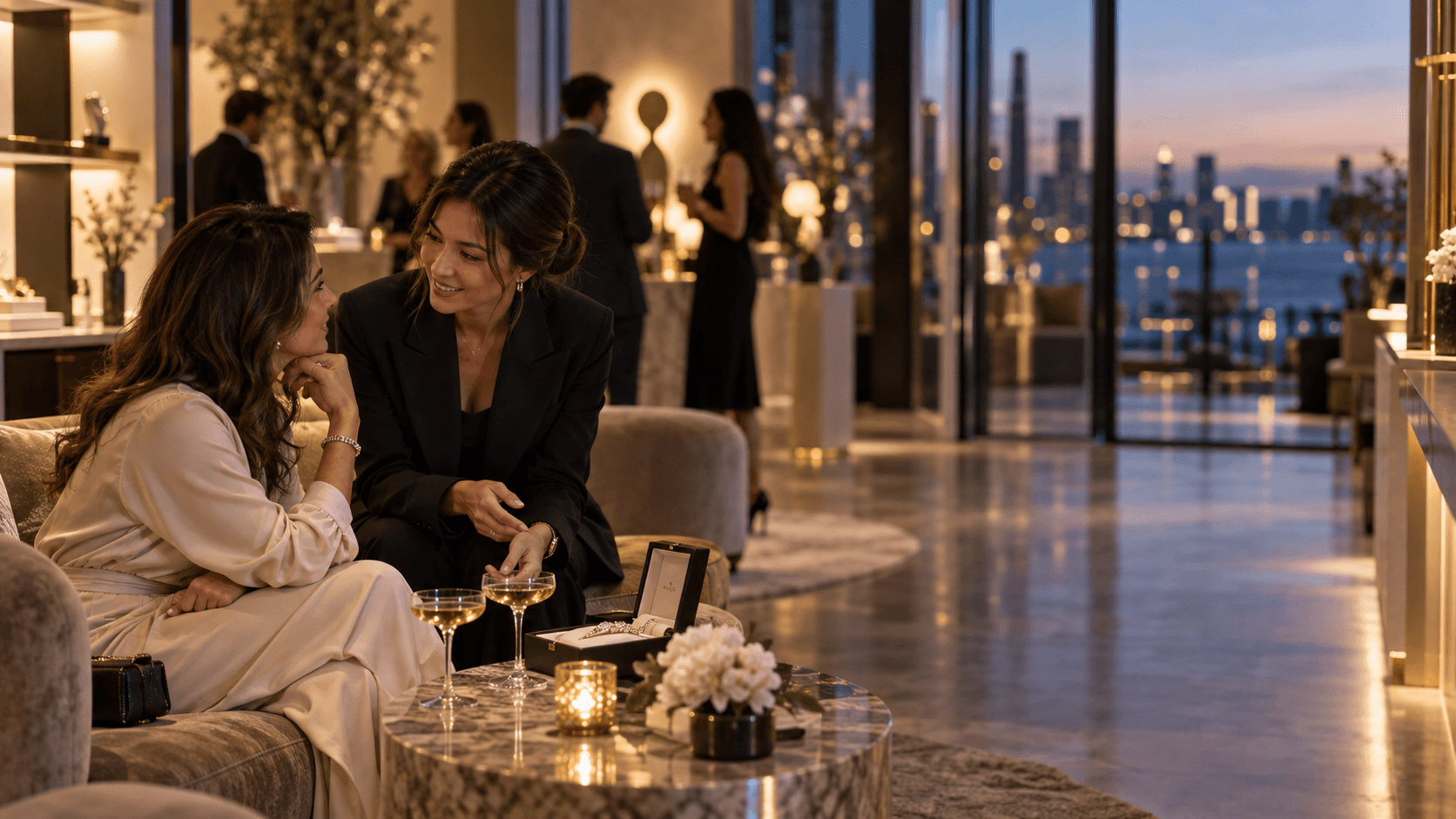
Le commerce de détail de luxe a dépassé depuis longtemps les simples produits sur étagère. Le marketing expérientiel pour les maisons de luxe façonne désormais la manière dont les gens découvrent, s'engagent et restent fidèles aux marques qu'ils aiment.
Les magasins phares (flagships) sont devenus des scènes pour des événements multisensoriels, des activations sur invitation uniquement et des installations culturelles qui estompent la frontière entre boutique et destination. Les marques gagnantes dans ce climat traitent chaque interaction client comme une donnée et une relation.
Ce changement n'est pas cosmétique. Bain et Altagamma rapportent que les dépenses mondiales dans le secteur du luxe ont atteint 1 443 milliards d'euros en 2025, les expériences de luxe continuant de devancer les biens tangibles, tandis que les biens de luxe personnels se sont stabilisés à 358 milliards d'euros.
Le gain derrière chaque activation est un lien émotionnel avec les clients qui survit à la soirée elle-même. Les recherches de la Harvard Business Review ont révélé que les clients pleinement connectés sont, en moyenne, 52 % plus précieux que ceux qui sont seulement très satisfaits.
Cinq points clés expliquent ce qui stimule la croissance du luxe aujourd'hui
Les expériences surpassent les biens. Les acheteurs aisés continuent de réorienter leurs dépenses vers l'indulgence expérientielle plutôt que vers les produits physiques, et cette tendance s'est maintenue de 2025 à 2026.
L'exclusivité crée un véritable lien. Les événements sur invitation uniquement et les activations privées créent un bouche-à-oreille et une recommandation que les médias payants ne peuvent pas reproduire.
Les magasins physiques doivent mériter leur espace. Les boutiques qui mêlent vente au détail, hospitalité et divertissement dans un concept d'expérience unique voient leur temps de visite s'allonger et leur taux de conversion augmenter.
Les données de première main sont le moteur de la personnalisation. Les maisons qui capturent les données d'interaction, et pas seulement l'historique d'achat, proposent des approches qui donnent aux clients le sentiment d'être individuellement reconnus.
L'IA rend l'engagement personnalisé évolutif. La technologie permet désormais à une entreprise de luxe de mener des actions personnalisées, de suivre l'engagement sur tous les canaux et d'attribuer le chiffre d'affaires à des relations spécifiques sans augmenter ses effectifs.
Les magasins de luxe deviennent des destinations expérientielles
Le magasin phare a été réinventé. Là où les boutiques se concentraient autrefois sur l'exposition et la transaction, les grandes maisons construisent désormais des espaces qui fonctionnent comme des centres de style de vie, à la fois points de vente, lieux culturels et occasions de rencontres sociales.
La boutique Rive Droite de Saint Laurent à Paris abrite Sushi Park, un restaurant omakase, au sein même de l'espace mode. Ce seul détail communique ce qu'aucune campagne publicitaire ne peut faire : la marque occupe une place dans toute la vie du client, pas seulement dans sa garde-robe.
Le Tiffany Blue Box Cafe prolonge sa signature esthétique jusqu'au petit-déjeuner et à l'heure du thé. Les clients sont plongés dans l'identité de la marque avant même de toucher un seul produit, et ils repartent avec un souvenir plutôt qu'avec un reçu.
Bain et Altagamma conseillent aux détaillants de luxe de repenser l'espace physique autour de flagships moins nombreux mais plus grands, qui procurent émotion, immersion et connexion personnalisée. Le nombre de magasins n'est plus la métrique de référence. C'est la profondeur de la relation qui l'est.
Le design d'expérience rend les marques inoubliables
Le design d'expérience dans le commerce de détail de luxe consiste à orchestrer chaque détail sensoriel (son, parfum, éclairage, rythme) pour renforcer l'identité de la marque. Les magasins qui le font bien signalent des temps de visite plus longs et des paniers moyens plus élevés.
Les miroirs interactifs, la projection 3D et les terminaux de recommandation basés sur l'IA ne sont plus des gadgets. Ils deviennent l'infrastructure standard de tout flagship en concurrence pour attirer l'attention des acheteurs premium et ultra-riches.
L'espace physique conserve toute son importance. Les données du Bureau du recensement des États-Unis ont estimé le commerce électronique à 16,9 % du total des ventes au détail au premier trimestre 2026, ce qui signifie qu'environ cinq dollars sur six sont toujours dépensés en personne.
Pour en savoir plus sur la façon dont une conversation se poursuit après la visite, lisez l'article Qu'est-ce que le marketing conversationnel ? sur le blog de BSPK.
Les événements exclusifs renforcent la fidélité des consommateurs aisés
Les événements privés restent l'un des outils les plus performants de la stratégie du luxe. Les soirées sur invitation uniquement, les rencontres avec les créateurs et les activations sur mesure offrent aux consommateurs aisés ce qu'aucun canal de commerce électronique ne peut proposer : un accès privilégié.
Les budgets évoluent en conséquence. Les dépenses mondiales dans l'événementiel expérientiel ont augmenté de 8,3 % pour atteindre 138,94 milliards de dollars en 2025 et sont en voie d'atteindre une croissance de 10,3 % en 2026, selon les recherches de PQ Media.
Ces moments génèrent du contenu organique, des recommandations par bouche-à-oreille et des liens émotionnels avec la marque. Lorsque les clients du luxe se sentent privilégiés, ils reviennent et incitent d'autres personnes à les suivre.
Les activations transforment les invités en ambassadeurs de la marque
Les installations artistiques en direct, les sessions de mixologie et les expositions thématiques transforment les acheteurs passifs en participants actifs. L'événement lui-même devient l'histoire qu'ils partagent, générant une portée sociale qu'aucun placement payant ne peut égaler.
Les données comportementales le confirment. Les recherches de Cvent indiquent que 75 % des participants se sentent plus connectés à une marque après une activation en personne, et que les entreprises qui gèrent ces programmes génèrent trois fois plus de notoriété par le bouche-à-oreille que celles qui ne le font pas.
Les jeunes générations aisées stimulent cette demande. L'étude sociale 2026 d'Eventbrite a révélé que 79 % des 18 à 35 ans prévoient d'assister à plus d'événements en 2026, et qu'ils souhaitent des rassemblements spontanés plutôt que mis en scène.
Ce sujet est étroitement lié à l'article Qu'est-ce que l'expérience client dans le luxe ?, qui traite des standards de service évitant qu'une première visite ne soit la dernière.
Les stratégies de marketing expérientiel stimulent l'intention d'achat réelle
Le retour sur investissement des activations en direct est désormais documenté. Cvent rapporte que 61 % des participants se déclarent plus enclins à acheter après un événement, et que plus de 90 % des participants dont la confiance en une marque a augmenté sur place ont fini par acheter.
Cette hausse des conversions reflète une relation plutôt qu'une simple exécution astucieuse. Elle témoigne de l'expérience d'une personne qui a passé du temps au cœur de l'histoire de la marque, a rencontré ses équipes et a noué un lien émotionnel qu'une publicité display ne peut reproduire.
La rapidité d'achat suit la confiance. Le même ensemble de données a montré que 72 % des participants convertissent plus rapidement lorsqu'ils assistent à des événements, ce qui fait des programmes en direct un outil d'accélération des ventes plutôt qu'un simple levier de notoriété.
L'expérience client est le nouveau rempart concurrentiel
Pour les acheteurs fortunés, l'expérience client est le produit lui-même. Une maison aux produits impeccables mais au cadre de vente purement transactionnel perdra du terrain face à une autre qui enveloppe ses produits et services dans un rituel mémorable et sur mesure.
Les attentes sont définies à d'autres niveaux. Les recherches de McKinsey ont révélé que 71 % des consommateurs attendent des entreprises qu'elles proposent des interactions personnalisées, et que 76 % se sentent frustrés lorsque ce n'est pas le cas.
Capturer les données d'interaction (ce à quoi un client a réagi, ce qu'il a demandé ou partagé) crée une boucle de rétroaction qui rend chaque visite suivante plus personnelle. C'est là que les programmes en direct et la stratégie de données de première main se croisent pour créer un avantage durable.
En complément, l'article Stratégies de vente au détail de luxe explore comment ces insights sont appliqués au sein d'un réseau de magasins.
La fidélité émotionnelle surpasse les récompenses transactionnelles dans le commerce de luxe
Les points et les paliers d'achat relèvent de la transaction. La fidélité client basée sur le sentiment est une relation, et elle se comporte différemment sur chacun des indicateurs clés des leaders de croissance.
Les recherches de Cvent ont révélé que 40 % des clients affirment que les activations en direct augmentent directement leur fidélité à une marque, tandis que 52 % des entreprises citent le renforcement de la fidélité des clients comme l'objectif principal de ces programmes. L'intention et le résultat sont enfin alignés.
L'écart se manifeste au niveau de la rétention. Les marques qui construisent des liens émotionnels conservent leurs clients malgré les hausses de prix, les trimestres plus calmes et les lancements concurrentiels, tandis que les marques qui captent l'attention par des promotions doivent constamment payer pour la conserver.
La Harvard Business Review présente clairement l'argument commercial : une connexion émotionnelle compte plus que la satisfaction du client lorsque vous cherchez à accroître la valeur d'une relation.
Dimension | Fidélité transactionnelle | Fidélité émotionnelle |
|---|---|---|
Ce qui la motive | Remises, points, paliers d'achat | Valeurs partagées, reconnaissance, confiance |
Le ressenti du client | Échange équitable | Un véritable lien avec la marque |
Ce qu'elle produit | Achats répétés | Recommandation, bouche-à-oreille, intimité avec la marque |
Ce qui la brise | Une meilleure offre ailleurs | Une promesse non tenue |
Ce dont elle a besoin | Un moteur de récompenses | Des insights clients et de la mémoire |
Les valeurs partagées transforment les acheteurs en ambassadeurs
Les cinq « C » les plus souvent cités dans le design d'expérience s'y rapportent directement. La Connexion crée une résonance émotionnelle, le Contenu crée des moments partageables, la Communauté crée un sentiment d'appartenance, la Personnalisation (Customization) crée des points de contact personnels, et la Conversion crée des résultats d'achat mesurables.
La connexion et la personnalisation sont les éléments les plus importants sur le marché haut de gamme. Un client qui se sent écouté et compris n'a pas besoin de réduction, et les études de marché montrent régulièrement que les acheteurs connectés émotionnellement sont moins sensibles aux prix.
Les valeurs comptent tout autant que le service. Lorsque la marque et ses clients partagent une vision commune sur le savoir-faire, la durabilité ou la culture, la relation survit à une hausse de prix qui mettrait fin à une relation transactionnelle.
C'est pourquoi les plus grandes maisons investissent dans des services complémentaires : retouches, entretien, rendez-vous privés et service après-vente. C'est dans ces services que s'établit la confiance, bien après la fin d'une campagne marketing.
Les campagnes expérientielles touchent les consommateurs ultra-riches grâce aux réseaux sociaux et aux partenariats
Les réseaux sociaux ont changé la façon dont les campagnes en direct se propagent. Lorsqu'un invité partage un moment d'un événement exclusif, il apporte quelque chose qu'un canal propriétaire ne peut offrir : une caution de tiers, en direct de l'événement.
Cvent indique que 87 % des participants à un événement partagent leur expérience sur Instagram, ce qui en fait la plateforme leader pour ce type de contenu. Pour les maisons ciblant les consommateurs ultra-riches, cette portée organique apporte une crédibilité supérieure à presque tous les canaux payants.
Les partenariats avec des chefs, des artistes, des hôteliers ou des institutions culturelles permettent à une maison d'emprunter l'audience et la réputation de catégories premium connexes. Ces collaborations créent également du contenu perçu comme éditorial plutôt que promotionnel, ce qui correspond exactement au ton auquel les publics fortunés sont sensibles.
Les réseaux sociaux amplifient des moments que l'argent ne peut acheter
Concevoir un moment que les gens souhaitent photographier et partager est l'un des résultats les plus précieux ici. Cela permet d'étendre une soirée exclusive à des personnes qui n'étaient pas présentes, souvent les bonnes cibles.
Les maisons qui conçoivent leurs événements autour du partage (décors visuels uniques, détails mémorables et touches personnelles) génèrent un impact numérique durable à partir d'une seule activation. La stratégie de contenu et la stratégie événementielle fusionnent en une seule et même stratégie.
Les équipes de vente au détail trouveront également utile l'article S'adapter à l'essor de la mode de luxe d'occasion, car les valeurs des clients continuent d'évoluer.
Le marketing du luxe doit combiner des produits d'exception avec des moments mémorables pour les clients
La stratégie de luxe la plus efficace associe l'excellence du produit au design d'expérience. Le savoir-faire et le patrimoine restent fondamentaux, mais ils ont besoin d'une scène pour s'exprimer.
Le Julius Baer Global Wealth and Lifestyle Report 2026 a révélé que les expériences restent la catégorie de dépenses dominante dans toutes les régions, menée par les hôtels de luxe et la haute gastronomie. Les segments axés sur l'expérience continuent d'absorber des budgets autrefois alloués aux biens physiques.
Les maisons qui traitent la visite en magasin, l'événement et le suivi comme des parties équivalentes d'un même plan fidélisent leurs clients haut de gamme. Celles qui se concentrent uniquement sur le produit sont en train de les perdre.
Le commerce expérientiel crée des moments qui se consolident avec le temps
Une seule soirée bien exécutée génère un impact immédiat : ventes, contenu social et engagement émotionnel. L'effet cumulé provient de la capture de ce qui s'est passé : qui était présent, à quoi ils ont réagi, ce qu'ils ont acheté et ce qu'ils ont dit.
Lorsque ces données d'interaction sont conservées au niveau de la marque plutôt qu'au niveau du conseiller de vente, elles deviennent un actif permanent. La campagne suivante, l'événement suivant, le message personnel suivant, tout devient plus précis parce que l'entreprise se souvient réellement de la personne.
Pour en savoir plus sur la façon dont se construisent les moments emblématiques, lisez L'essor du Quiet Luxury et Comment Chanel, Louis Vuitton, Dior et Gucci créent des expériences uniques en magasin de luxe.
BSPK, la plateforme de commerce authentique alimentée par l'IA et les données de première main, transforme les interactions en relations durables
BSPK est la plateforme de commerce authentique alimentée par l'IA et les données de première main. Elle transforme les interactions quotidiennes des clients en données prêtes pour l'IA, afin que votre marque puisse traiter chaque client comme un individu unique, à grande échelle.
La plupart des détaillants de luxe investissent massivement dans les activations en direct, puis perdent les informations précieuses générées lors de ces moments. La soirée se termine, la liste des invités finit dans un tableur et la connexion émotionnelle ne se transforme jamais en un levier exploitable pour l'entreprise.
Quatre problèmes structurels causent cette perte. Les informations clients sont fragmentées entre les systèmes du magasin, du site web et du back-office. Les modèles d'IA reçoivent des signaux faibles et génériques au lieu de données d'interaction riches. Les campagnes ciblent toujours des cohortes au lieu d'individus. Et lorsque le personnel de vente quitte l'entreprise, la connaissance du client s'en va avec lui.
À l'ère de l'IA, votre véritable avantage réside dans les données clients que vous possédez et la manière intelligente dont vous les exploitez.
BSPK capture chaque interaction à haute valeur ajoutée en tant que donnée de première main
Les événements, rendez-vous, séances de stylisme, messages et visites en magasin deviennent des enregistrements structurés liés à un profil client permanent. Les préférences, les listes d'envies, l'historique d'achat et les petits détails mentionnés en passant sont regroupés au même endroit, et non plus dans un carnet personnel.
L'application mobile BSPK pour les conseillers intègre cette capture directement dans le flux naturel de la conversation, garantissant des fiches complètes sans travail administratif supplémentaire.
BSPK unifie chaque signal en un profil unique et vivant
La Vue Unique Client centralise les signaux du magasin, du commerce électronique, des stocks et de l'engagement dans une fiche relationnelle unique que le marketing, le merchandising et les opérations peuvent tous exploiter. Customer Intelligence transforme cette fiche en insights immédiatement exploitables par vos équipes.
Une synchronisation bidirectionnelle en temps réel maintient les profils à jour, et les intégrations ouvertes permettent de superposer BSPK aux systèmes que vous utilisez déjà. Pas de remplacement lourd de système, pour un déploiement opérationnel en deux semaines.
BSPK active les relations sur tous les canaux utilisés par vos clients
Les agents BSPK font le travail pour lequel personne n'a de temps. L'agent Acquire identifie qui est prêt à acheter, l'agent Engage trouve le bon moment pour entrer en contact et rédige le message avec la voix de votre marque, l'agent Convert prépare le conseiller avant un rendez-vous, et l'agent Campaign gère des campagnes personnalisées à grande échelle.
Chaque message est envoyé sur le canal que le client utilise réellement, y compris WhatsApp, WeChat, Line, SMS et e-mail. Un humain valide chaque envoi, garantissant que la conversation reste humaine et que le contrôle reste entre vos mains.
Des outils de narration visuelle permettent au siège de créer des collections de marque que les conseillers personnalisent pour chaque client, tandis que le module Analyses et Rapports attribue les actions, rendez-vous et revenus par magasin, région et conseiller.
Chaque interaction client devient une intelligence de marque permanente
Chaque relation construite par vos équipes enrichit l'intelligence de votre marque, et chaque insight rend la conversation suivante plus pertinente. C'est un rempart qu'aucun concurrent ne peut acheter, mais seulement mériter, car il se construit à partir de milliers de petits moments déjà partagés par vos équipes. Découvrez les résultats dans les études de cas BSPK et à travers nos solutions pour le commerce de détail de luxe.
Foire aux questions
Le marketing expérientiel pour les marques de luxe crée des interactions immersives
Le marketing expérientiel pour les maisons de luxe est une stratégie qui crée des interactions immersives et mémorables entre une marque et ses clients, au-delà de la publicité traditionnelle ou de l'exposition de produits. Il comprend des événements exclusifs, des cadres sensoriels en magasin, des installations culturelles et des activations personnalisées conçues pour créer des liens émotionnels durables et fidéliser la clientèle.
L'objectif est la participation plutôt que la simple exposition. Une personne qui participe à une expérience se souvient de la marque différemment d'une personne qui a simplement fait défiler une publicité.
Les détaillants de luxe créent un lien émotionnel en faisant en sorte que les clients se sentent reconnus
La création d'un attachement émotionnel commence par la connaissance de l'individu : ses préférences, son histoire, ses valeurs et les moments qui comptent pour lui. Les détaillants de luxe y parviennent grâce à des contacts personnalisés, des accès sur invitation uniquement et un service qui fait écho aux conversations précédentes plutôt qu'à un segment générique.
La condition pratique est la mémoire au niveau de la marque. Capturez ce qui se passe lors de chaque interaction, unifiez-le dans un profil unique et utilisez-le pour que le prochain message soit perçu comme personnel et non automatisé.
Les 4 P du marketing du luxe s'appliquent avec une approche distincte
Les quatre P traditionnels (produit, prix, place (distribution) et promotion) s'appliquent au haut de gamme avec des priorités différentes. Le produit met l'accent sur le savoir-faire et la rareté, le prix signale le statut et l'exclusivité, la distribution couvre les destinations physiques et les points de contact numériques, et la promotion s'appuie sur le storytelling et les retombées médias plutôt que sur la publicité de masse.
Le marketing émotionnel sous-tend ces quatre piliers. Chaque P est l'occasion de renforcer ce que la marque représente et pourquoi elle est unique.
Les événements exclusifs offrent un sentiment d'accès privilégié que la publicité ne peut pas acheter
Les événements privés produisent des résultats que les médias payants ne peuvent égaler : un véritable bouche-à-oreille, du contenu social organique et une profonde fidélité de la part de personnes qui se sentent personnellement reconnues. Une réaction émotionnelle forte au sein de l'événement se transforme en recommandation à l'extérieur.
Ils génèrent également des données d'interaction de première main qui améliorent chaque contact ultérieur, ce qui permet à chaque investissement de fructifier au lieu de s'essouffler.
La mesure du ROI expérientiel dépend de l'attribution et de l'engagement
La mesure a historiquement été le point faible de cette discipline, mais cela est en train de changer. Les équipes utilisent désormais des plateformes de clienteling pour attribuer la participation aux événements aux achats ultérieurs, suivre les taux de réponse aux messages de suivi personnalisés et comparer la conversion entre les invités présents et ceux qui ne le sont pas.
Les indicateurs utiles vont au-delà du simple nombre de participants. Le taux de réachat, le taux de réponse et le chiffre d'affaires par client présent montrent si un événement a produit une véritable relation ou simplement une agréable soirée. Le calculateur de ROI BSPK est un excellent point de départ pour modéliser cet impact.
Votre prochaine étape : une démonstration de BSPK avec vos propres données
Chaque événement organisé par votre maison est une occasion de renforcer une relation ou de la laisser s'estomper une fois les portes fermées. La différence réside dans la capacité à transformer les informations de cette soirée en un actif utilisable dès le lendemain.
BSPK fait de chaque interaction une donnée de marque permanente et exploitable. Moins de suppositions, des prises de contact plus personnelles et davantage de revenus générés auprès de vos clients existants.
Réservez une démonstration et découvrez vos propres données en direct lors de la session. Opérationnel en deux semaines, sans remplacement lourd de vos systèmes existants, pour identifier clairement quels clients sont prêts pour leur prochain achat.

Articles similaires
Connexion émotionnelle avec les clients : comment le marketing expérientiel de luxe renforce la fidélité à la marque
Par
Paul Andre de Vera
Blog

Ce qui distingue la distribution de produits de beauté de luxe : expérience en magasin, nouveaux formats et soutien au lancement de marques
Par
Paul Andre de Vera
Blog

Comment Chanel, Louis Vuitton, Dior et Gucci créent des expériences uniques dans leurs boutiques de luxe
Par
Paul Andre de Vera
Blog

Au cœur de la boutique de luxe : à quoi s'attendre lors des rendez-vous, du stylisme et de l'expérience en magasin
Par
Paul Andre de Vera
Blog
