
Les marques de luxe les plus reconnues au monde ne sont pas devenues des icônes par hasard. Chaque élément de l'expérience en boutique, l'architecture, la formation des conseillers de vente, les rituels de présentation des produits, l'approche du service après-vente, reflètent une stratégie délibérée sur la façon dont la marque souhaite que ses clients se sentent.
Comprendre comment ces maisons abordent l'expérience en boutique révèle des modèles que toute marque de luxe peut appliquer. Les principes qui font qu'une boutique Chanel se distingue d'un stand de grand magasin, ou ce qui différencie un flagship Louis Vuitton du hall d'un hôtel de luxe, sont enseignables et transférables.
Selon l'Étude du luxe Bain-Altagamma 2025, les marques de luxe qui ont surperformé en 2025 étaient des acteurs spécialisés, et plus de 70 % des marques en croissance étaient concentrées plutôt que généralistes. Une identité d'expérience claire et cohérente était la marque de fabrique de ceux qui ont su fidéliser leurs clients tout au long d'une année difficile.
Points clés à retenir
Des leçons que chaque marque de luxe peut tirer des maisons emblématiques. ### Le patrimoine n'est pas de l'histoire, c'est un langage de service
Ce qui crée une expérience de signature en boutique. Les marques de luxe emblématiques investissent dans la vente physique comme expression première de leur identité.
L'espace physique communique des valeurs. Les marques de luxe emblématiques investissent dans la vente physique comme expression première de leur identité.
La présentation des produits est un acte de commissariat. Dans les boutiques les plus haut de gamme, le choix de ce qu'il faut montrer à un client spécifique, dans quel ordre et dans quel contexte, est un acte de haute technicité.
La narration du patrimoine rend les produits mémorables. Lorsqu'un client comprend l'origine d'une technique, la raison pour laquelle une couleur a été choisie, ou la manière dont une collection se connecte aux archives de la maison, il perçoit le produit différemment.
Des leçons que chaque marque de luxe peut tirer des maisons emblématiques
1. ### Le patrimoine n'est pas de l'histoire, c'est un langage de service
Les marques de luxe les plus pérennes n'utilisent pas le patrimoine comme une pièce de musée, mais comme un langage de service vivant. Lorsqu'un conseiller de vente d'une maison emblématique explique comment un vêtement a été conçu, la provenance d'un matériau ou l'époque créative qui a inspiré un design, il offre au client une émotion et une histoire à partager.
Cela transforme l'achat d'une simple transaction en une histoire. Les clients capables de raconter l'histoire de ce qu'ils possèdent, et pas seulement son coût ou qui l'a fabriqué, développent un attachement plus profond à la marque.
1. ### La cohérence sur chaque point de contact renforce l'autorité de la marque
Un client qui visite un flagship d'une marque prestigieuse, puis une autre boutique dans une ville différente, doit ressentir la même marque, la même chaleur, le même niveau d'expertise et les mêmes rituels. Les personnes seront différentes, mais l'expérience ne doit pas varier de manière spectaculaire.
Instaurer cette cohérence exige plus que des manuels de formation. Cela nécessite une intelligence partagée sur chaque client afin que, lorsqu'il visite un point de vente où il est inconnu, le conseiller de vente puisse tout de même lui offrir un service préparé et informé, plutôt que de repartir de zéro.
1. ### Le service privé est l'offre à plus forte marge du commerce de luxe
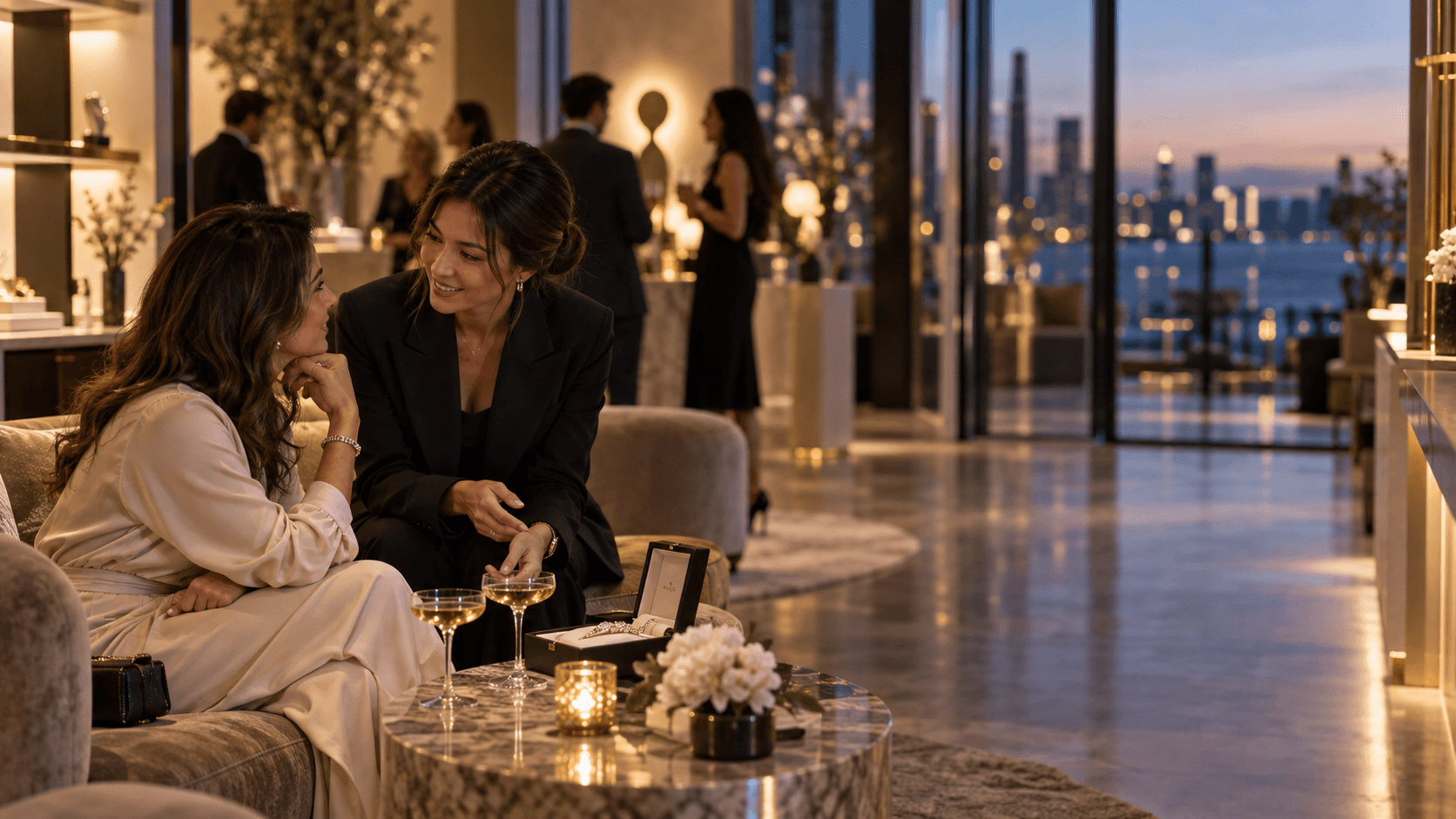
Le rendez-vous privé, où un client bénéficie d'un temps dédié, d'une sélection sur mesure et de l'attention exclusive d'un conseiller de vente expert, figure parmi les outils de fidélisation les plus efficaces du luxe. Les clients qui bénéficient de ce niveau de service achètent davantage et reviennent plus souvent.
L'équation économique est simple : un rendez-vous privé nécessite du temps de personnel, mais génère des valeurs de transaction plus élevées et une fidélité client accrue à long terme. Pour les marques qui ont choisi de généraliser le service privé pour leurs meilleurs clients, le retour sur investissement est évident, tant dans les données de chiffre d'affaires que de fidélisation.
1. ### L'acquisition de nouveaux clients naît des relations clients existantes
Les boutiques de luxe les plus performantes ne dépendent pas fortement du trafic de passage ou de la publicité numérique pour attirer leurs meilleurs clients. Elles s'appuient sur les recommandations. Lorsqu'un client adore l'expérience, il en parle à son entourage, et ces nouveaux clients arrivent déjà prédisposés à faire confiance à la marque.
Cette dynamique de parrainage est la raison pour laquelle l'expérience client constitue également une stratégie marketing. La marque qui valorise ses clients actuels crée un moteur d'acquisition organique qui se renforce avec le temps.
1. ### Les conseillers de vente qui connaissent leurs clients sont l'actif le plus précieux de la marque
La connaissance qu'un conseiller de vente qualifié bâtit au fil des années avec sa clientèle — ses préférences, ses occasions, ses aversions, sa dynamique familiale — est irremplaçable. Elle ne peut être reproduite par la seule connaissance des produits, ni par les seules données. Elle nécessite les deux.
Les marques qui soutiennent leurs conseillers de vente avec les bons outils, et veillent à ce que ces connaissances soient capturées au niveau de la marque et pas seulement dans la mémoire du conseiller, protègent l'un de leurs avantages concurrentiels les plus précieux.
Pour les lecteurs désireux de savoir comment Chanel, Louis Vuitton, Dior et Gucci créent une boutique de luxe signature, Le commerce de client à boutique dans le retail de luxe : relier la découverte en ligne aux expériences en boutique fournit un contexte BSPK pertinent.
Ce qui crée une expérience signature en boutique
L'espace physique communique des valeurs
Les marques de luxe emblématiques investissent dans la vente physique comme expression première de leur identité. Les matériaux utilisés pour la construction, l'intensité de l'éclairage, le parfum, l'ambiance sonore : tout cela constitue des signaux intentionnels. La boutique n'est pas seulement un lieu de vente ; c'est un lieu pour vivre ce en quoi la marque croit.
Lorsqu'un client pénètre dans un espace qui matérialise les valeurs de la marque, il ralentit. Son regard change. Il pose des questions différentes.
L'environnement lui-même devient une partie de la raison pour laquelle il choisit de rester.
La présentation des produits est un acte de commissariat
Dans les boutiques les plus haut de gamme, le choix de ce qu'il faut montrer à un client spécifique, dans quel ordre et dans quel contexte, est un acte de haute technicité. Les conseillers de vente qui connaissent leurs clients n'ouvrent pas un tiroir pour tout en sortir. Ils sélectionnent, et cette sélection montre au client que le conseiller a pensé à lui.
Cette approche de commissariat s'étend aux interactions numériques. Lorsqu'un conseiller de vente envoie une sélection de produits personnalisée à un client avant sa visite, ou effectue un suivi avec une recommandation ciblée après celle-ci, le message est clair : j'ai pensé spécifiquement à vous.
La narration du patrimoine rend les produits mémorables
Lorsqu'un client comprend l'origine d'une technique, la raison pour laquelle une couleur a été choisie, ou la manière dont une collection se connecte aux archives de la maison, il perçoit le produit différemment. L'histoire transforme l'expérience de possession et augmente la probabilité qu'il la partage.
Les conseillers de vente formés au patrimoine de la marque ne sont pas seulement informés ; ce sont des conteurs d'histoires. Les meilleurs savent lier un produit spécifique à un moment précis de l'histoire de la marque, de manière à donner au client l'impression d'acquérir une part de quelque chose de plus grand qu'une simple saison.
Cette analyse sur la façon dont Chanel, Louis Vuitton, Dior et Gucci créent une boutique de luxe signature fait également écho à l'article Au cœur de la boutique de luxe : à quoi s'attendre lors des rendez-vous, du stylisme et de l'expérience en magasin.
La personnalisation à l'échelle de la Maison
Le monogrammage et la personnalisation renforcent l'attachement
La possibilité de personnaliser un produit, d'y ajouter des initiales, de choisir un détail sur mesure, de commander une création inédite, génère un niveau d'attachement qu'aucun article de série ne peut égaler. Le client qui a passé commande possède une pièce que personne d'autre au monde n'a à l'identique.
Cette dimension sur mesure du luxe se développe fortement. Les clients ayant fait l'expérience de la personnalisation en deviennent les ambassadeurs, reviennent spécifiquement pour cela et la décrivent autour d'eux. C'est l'une des formes les plus efficaces à la fois de fidélisation et de bouche-à-oreille.
Les événements clients liés au patrimoine créent un accès exclusif
La présentation privée d'une archive, un dîner exclusif célébrant un savoir-faire traditionnel, une visite des coulisses d'un atelier de fabrication : ces événements créent des souvenirs émotionnels que les produits seuls ne peuvent égaler. Les clients qui y assistent ne se sentent pas seulement valorisés, ils se sentent initiés.
Les événements de marques de luxe les plus mémorables connectent le client à l'histoire globale de la maison. Ce ne sont pas des occasions de vente, mais des moments de relation. Les ventes découlent naturellement de cette relation.
Pour une autre perspective sur la façon dont Chanel, Louis Vuitton, Dior et Gucci créent une boutique de luxe signature, découvrez Stratégies de vente de luxe.
Les équipes de vente s'intéressant à la façon dont Chanel, Louis Vuitton, Dior et Gucci créent une boutique de luxe signature pourront également trouver utile la lecture de Qu'est-ce que l'expérience client dans le luxe ?.
Pour compléter l'analyse sur la manière dont Chanel, Louis Vuitton, Dior et Gucci créent une boutique de luxe signature, l'article de BSPK Ce qui distingue le retail de la beauté de luxe : expérience en boutique, nouveaux formats et soutien au lancement de marque explore une thématique retail connexe.
Comment BSPK peut vous aider
Dans ce contexte : Offrir une expérience signature, de manière cohérente, dans chaque boutique et à tous les niveaux de prix, exige que chaque conseiller de vente dispose des bonnes informations lors de chaque interaction. BSPK rend cela possible en transformant la connaissance client individuelle en intelligence de marque. BSPK est conçu pour l'ère de l'IA appliquée au commerce.
Foire aux questions
Comment les marques de luxe emblématiques forment-elles leurs conseillers de vente ?
Les grandes maisons de luxe investissent massivement dans la transmission de leur patrimoine, la connaissance des produits et les compétences relationnelles. Les conseillers sont formés non seulement à décrire les produits, mais à les relier à l'histoire de la marque, et à écouter avec une attention telle que chaque client sente que la recommandation a été formulée spécifiquement pour lui.
Comment les marques de luxe gèrent-elles les clients qui visitent différents points de vente ?
Les meilleures marques maintiennent des profils clients qui les accompagnent d'une boutique à l'autre. Lorsqu'un client se rend dans une boutique d'une ville où il n'a pas l'habitude de faire ses achats, le meilleur service est assuré si ce point de vente peut accéder à son historique et à ses préférences, évitant ainsi d'avoir à tout recommencer.
Quel rôle joue le patrimoine dans l'expérience de luxe en boutique ?
Le patrimoine fonctionne comme un langage de service. Les conseillers de vente capables de relier un produit à l'histoire de la marque offrent aux clients un récit à s'approprier en même temps que l'objet. Cette histoire renforce l'attachement, justifie le prix et devient un sujet que le client partage, élargissant ainsi le rayonnement de la marque grâce à ses ambassadeurs les plus passionnés.
Comment les marques de luxe utilisent-elles les événements pour fidéliser leurs clients ?
Les événements de luxe créent des souvenirs émotionnels qui durent bien plus longtemps que n'importe quel produit. Les présentations privées, les dîners autour du patrimoine et les expériences d'accès exclusif montrent aux clients qu'ils font partie du cercle intime de la marque. Les clients qui ressentent ce sentiment d'appartenance restent fidèles et initient leur entourage à l'univers de la marque.
Prochaines étapes
Si votre marque offre un service exceptionnel dans certaines boutiques mais de façon irrégulière sur l'ensemble de votre réseau, BSPK peut vous aider à combler cet écart. Les connaissances clients recueillies dans une boutique accompagnent le client dans ses déplacements, de sorte que chaque visite soit parfaitement préparée.

Articles similaires
Connexion émotionnelle avec les clients : comment le marketing expérientiel de luxe renforce la fidélité à la marque
Par
Paul Andre de Vera
Blog

Ce qui distingue la distribution de produits de beauté de luxe : expérience en magasin, nouveaux formats et soutien au lancement de marques
Par
Paul Andre de Vera
Blog
Comment Chanel, Louis Vuitton, Dior et Gucci créent des expériences uniques dans leurs boutiques de luxe
Par
Paul Andre de Vera
Blog

Au cœur de la boutique de luxe : à quoi s'attendre lors des rendez-vous, du stylisme et de l'expérience en magasin
Par
Paul Andre de Vera
Blog
