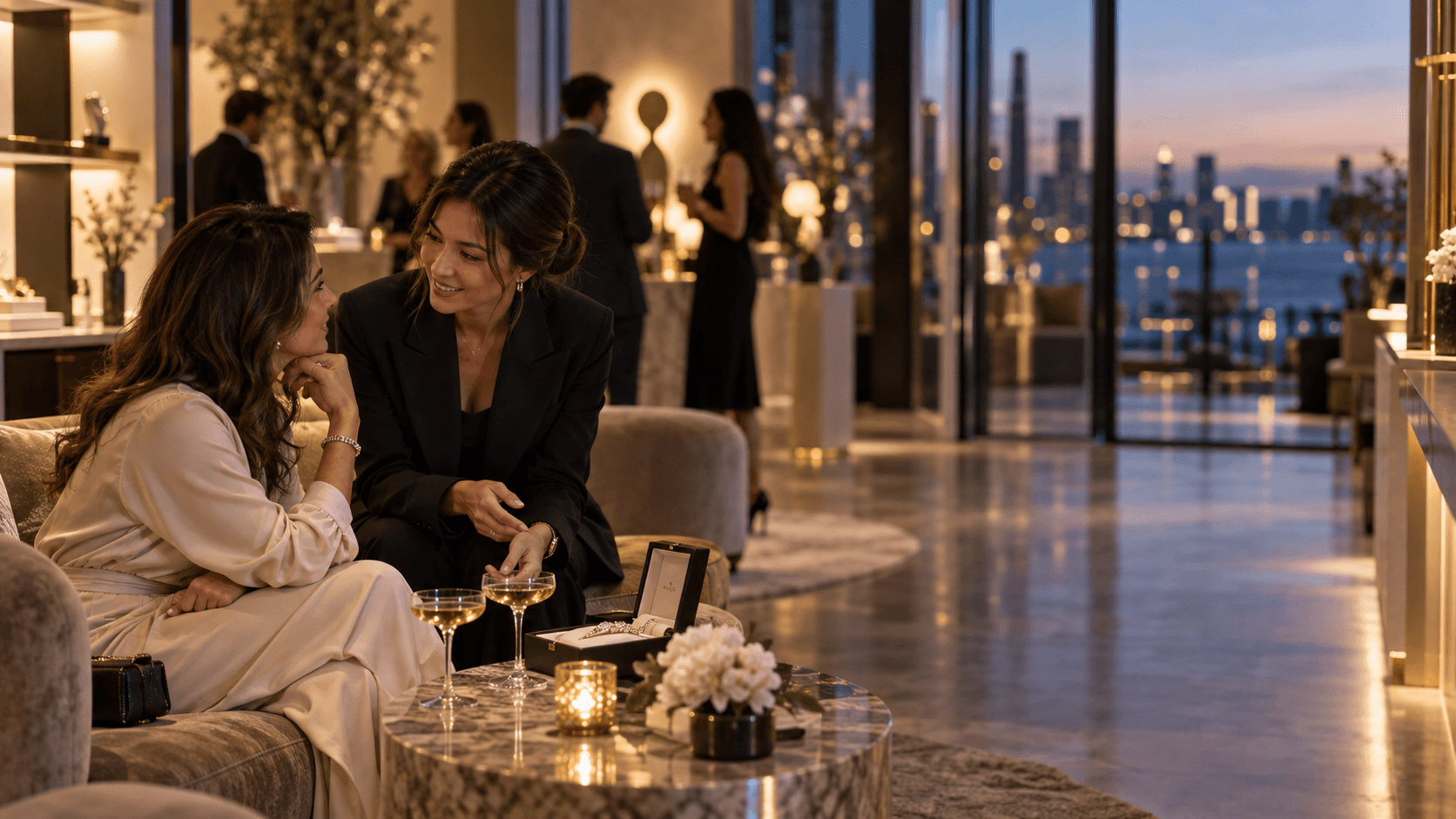
*Imaginez une cliente fidèle du secteur du luxe parcourant la dernière collection de Dior en ligne tard dans la nuit. Elle ajoute une veste de créateur à sa liste d'envies mais ne valide pas son panier. Le lendemain matin, elle reçoit un message personnalisé de sa boutique Dior locale : ils ont remarqué son intérêt et ont réservé cette même veste à sa taille.
Ce message s'accompagne d'une invitation à une séance de stylisme exclusive en boutique, agrémentée d'une coupe de champagne et d'une sélection sur mesure d'accessoires assortis. À cet instant, le « commerce client-boutique » prend vie, transformant de manière fluide une découverte en ligne en une expérience de luxe en personne.*
Points clés à retenir
Quand la découverte en ligne rencontre la vente de détail de luxe en boutique. Les clients d'aujourd'hui du commerce de détail de luxe naviguent de manière fluide entre les canaux numériques et physiques.
Invitations basées sur les données : des paniers d'e-commerce aux rendez-vous en boutique. Comment les marques de luxe savent-elles qui inviter, et quand ? La réponse réside dans les données.
Séances de stylisme personnalisées et expériences de produits réservés. Le commerce client-boutique repose sur l'exclusivité. L'un de ses piliers fondamentaux consiste à offrir aux clients un accueil privilégié qui les attend en boutique.
Renforcement du Clienteling et du commerce unifié. Pourquoi le commerce client-boutique est-il si précieux ? Il dynamise le clienteling en l'enrichissant d'informations numériques et en l'étendant au-delà de la boutique.
*Imaginez une cliente fidèle du secteur du luxe parcourant la dernière collection de Dior en ligne tard dans la nuit.
Quand la découverte en ligne rencontre la vente de détail de luxe en boutique
Les clients d'aujourd'hui du commerce de détail de luxe naviguent de manière fluide entre les canaux numériques et physiques. En fait, près de 60 % des acheteurs de produits de luxe visitent le site Web d'une marque avant de se rendre dans une boutique. Ils peuvent parcourir des lookbooks sur Instagram, interagir avec les réseaux sociaux d'une marque ou remplir des paniers en ligne, le tout avant même de se déplacer en magasin.
Les marques de luxe sont conscientes de ce comportement et s'efforcent désormais de combler le fossé entre la découverte en ligne et la conversion en personne. Cette approche client-boutique va bien au-delà de l'omnichannel ; il s'agit d'une stratégie unifiée où les données en ligne déclenchent une prise de contact dans le monde réel. Notamment, les consommateurs de luxe omnicanaux ont tendance à dépenser beaucoup plus que les acheteurs monocanal (près de *deux fois plus*, selon certaines estimations), ce qui rend cette passerelle extrêmement précieuse.
Les réseaux sociaux et les plateformes de commerce électronique font office de vitrines modernes pour les boutiques de luxe. Des marques comme Chanel et Gucci disposent d'une audience massive sur les réseaux sociaux et investissent massivement dans le contenu numérique pour susciter l'engagement de leur public. Cet engagement en ligne n'est pas une fin en soi : c'est le début d'un parcours que les détaillants de luxe aspirent à prolonger en boutique.
La philosophie est simple : aller à la rencontre du client là où il se trouve (souvent en ligne), puis l'inviter à vivre une expérience immersive en boutique qui scellera la relation. En s'appuyant sur des plateformes de commerce unifié et sur l'intégration des données, les maisons de luxe peuvent identifier un client sur l'ensemble des canaux et s'assurer que, qu'il clique ou qu'il se déplace, l'expérience reste d'un niveau d'excellence constant.
Pour les lecteurs qui évaluent le commerce client-boutique dans le secteur de la vente de détail de luxe, l'article Inside the Luxury Boutique: What to Expect From Appointments, Styling, and the In-Store Experience apporte un éclairage complémentaire de la part de BSPK.
Invitations basées sur les données : des paniers d'e-commerce aux rendez-vous en boutique
Comment les marques de luxe savent-elles qui inviter, et quand ? La réponse réside dans les données. Chaque clic, chaque article enregistré dans une liste d'envies ou chaque mention « J'aime » sur les réseaux sociaux révèle une intention. Les systèmes de clienteling intelligents analysent ces signaux. Ainsi, si une cliente ne cesse de s'intéresser à un sac à main spécifique, un conseiller de vente peut la contacter avec un message personnalisé : *« Nous avons remarqué que vous admiriez ce sac en ligne ; aimeriez-vous le découvrir en boutique ?
Nous en avons mis un de côté pour vous. »*
Cette démarche proactive transforme l'intérêt en ligne en visites en boutique. Les réseaux sociaux ajoutent une dimension supplémentaire : si un produit est tendance, les marques peuvent organiser des présentations privées et inviter les abonnés qui ont interagi. Certains conseillers utilisent même les données des réseaux sociaux pour identifier des passionnés de la marque ou des influenceurs locaux et leur envoyer des invitations personnalisées.
Le résultat : une communication basée sur les données qui semble intuitive, opportune et personnelle, avant même que le client ne franchisse la porte.
La segmentation et l'IA portent le commerce client-boutique à un niveau supérieur. En analysant le comportement en ligne, l'historique des achats et même l'engagement sur les réseaux sociaux, les marques peuvent identifier des segments de clientèle, tels que les « amateurs de sneakers » ou les « clients de haute joaillerie à fort pouvoir d'achat ». Le clienteling assisté par l'IA anticipe alors ce qu'un client pourrait désirer ensuite.
Par exemple, si une cliente qui a déjà acheté des robes de soirée a parcouru les escarpins de la nouvelle saison, le système peut générer une invitation privée à venir découvrir la dernière collection de chaussures, par exemple lors d'une vente privée VIP. Ces invitations personnalisées procurent un sentiment d'exclusivité et de pertinence, et ne doivent rien au hasard. C'est un luxe ciblé, propulsé par la donnée.
Cette réflexion sur le commerce client-boutique dans le secteur du luxe s'associe également aux Luxury Retail Strategies.
Séances de stylisme personnalisées et expériences de produits réservés
Le commerce client-boutique repose sur l'exclusivité. L'un de ses piliers fondamentaux consiste à offrir aux clients un accueil privilégié qui les attend en boutique. Les marques de luxe transforment de simples visites en magasin en expériences sur mesure : séances de stylisme personnalisées, consultations privées ou avant-premières adaptées aux goûts du client, enrichies par son comportement en ligne. Le client est accueilli dans un salon d'essayage préparé à sa taille, ou dans un espace privé présentant des accessoires déclinés dans sa palette de couleurs préférées, sélectionnés grâce aux données de ses achats antérieurs ou de ses filtres en ligne.
La plupart des grands détaillants de luxe proposent désormais des rendez-vous individuels. Les clients peuvent réserver un créneau horaire, préciser leurs attentes (ex. : maroquinerie, prêt-à-porter de soirée) et bénéficier à leur arrivée d'une expérience entièrement personnalisée et préparée pour eux.
L'expérience d'un produit réservé renforce encore cette attractivité. Lorsqu'une pièce en édition limitée arrive, un message peut indiquer : « Nous avons mis de côté le nouveau Birkin dans votre teinte favorite ; passez samedi pour le découvrir. » Qu'ils achètent ou non, cette attention renforce le sentiment de privilège et de traitement VIP.
Ces visites s'accompagnent souvent d'attentions luxueuses : salons privés, champagne, service de personnalisation (marquage à chaud) ou commandes sur mesure. Le résultat ? Une visite en magasin qui s'apparente à un événement privé, ce qui stimule l'engagement, la connexion émotionnelle et, en fin de compte, la conversion.
En complément du commerce client-boutique dans la vente de détail de luxe, l'article de BSPK How Chanel, Louis Vuitton, Dior, and Gucci Create Signature Luxury Store Experiences explore une thématique similaire liée au commerce de détail.
Renforcement du Clienteling et du commerce unifié
Pourquoi le commerce client-boutique est-il si précieux ? Il dynamise le clienteling en l'enrichissant d'informations numériques et en l'étendant au-delà de la boutique. Les conseillers de vente ne se limitent plus à accueillir les clients de passage ; ils peuvent les contacter de manière proactive en se basant sur leur comportement en ligne (« J'ai vu que vous aviez un coup de cœur pour nos nouvelles sneakers, souhaitez-vous que je réserve votre taille ? »). Cela rend chaque interaction plus pertinente et renforce le lien entre le client et la marque sur tous les canaux, du site Web à WhatsApp, jusqu'à la boutique.
D'un point de vue commercial, cela permet de concrétiser des ventes qui auraient pu être perdues en ligne. De nombreux clients du luxe préfèrent encore finaliser l'achat de pièces de valeur en personne, là où ils peuvent apprécier la qualité des matières ou s'assurer d'une coupe parfaite. En les invitant au moment le plus opportun, les marques transforment la navigation en ligne en acte d'achat.
Grâce aux données unifiées, tout achat effectué en boutique se synchronise avec le profil en ligne, permettant des suivis fluides et des suggestions sur mesure.
Au final, cette approche renforce la fidélité et la valeur client à long terme. Les invitations exclusives, les accès anticipés et les rendez-vous sur mesure permettent aux clients de se sentir privilégiés, renforçant les liens émotionnels et limitant la tentation d'aller voir ailleurs. C'est le meilleur du service haut de gamme de la vente de luxe, soutenu par l'intelligence et la portée du digital.
Les équipes de vente travaillant sur le commerce client-boutique dans le secteur du luxe pourront également trouver utile l'article What Sets Luxury Beauty Retail Apart: In-Store Experience, New Formats, and Brand Launch Support.
Conclusion : Unir le digital et le physique pour l'avenir du luxe
Le commerce client-boutique représente une nouvelle ère du commerce unifié dans la vente de détail de luxe, où l'engagement en ligne se traduit par des visites en boutique et où la personnalisation basée sur les données enrichit l'expérience vécue en magasin. Des marques comme Dior, Gucci et Chanel redéfinissent les codes du clienteling en veillant à ce que chaque interaction numérique trouve son accomplissement dans une rencontre physique en boutique. Cette stratégie ne stimule pas seulement les ventes à court terme en convertissant l'intérêt en ligne en achats, mais elle consolide également les relations clients à long terme grâce à un service d'exception et à l'exclusivité.
Dans un monde où les consommateurs de luxe naviguent constamment entre leur smartphone et les salons de vente, les détaillants capables de relier ces univers prendront une longueur d'avance. En invitant les clients à passer de l'écran à la boutique – grâce à des séances de stylisme personnalisées, des produits réservés et des expériences mémorables – les marques de luxe ne vendent pas seulement un produit, elles tiennent la promesse de ce qu'incarne leur enseigne : *intimité, exclusivité et expérience inoubliable*. Et c'est là une valeur qu'aucune interaction exclusivement en ligne ne peut totalement reproduire, c'est pourquoi cette approche client-boutique est appelée à définir le clienteling de la vente de détail de luxe dans les années à venir.
Pour un autre point de vue pertinent concernant le commerce client-boutique dans le secteur du luxe, découvrez The Rise of Quiet Luxury: A Retail Revolution in the Making.
Comment BSPK peut vous aider
Pour les marques de luxe axées sur le commerce client-boutique, BSPK aide les conseillers à mémoriser les préférences des clients, l'historique de leur relation et le contexte des suivis au fil des interactions. Cela permet de garantir une expérience haut de gamme plus cohérente alors que les clients naviguent entre les points de contact physiques et numériques.
Foire Aux Questions
Comment la découverte en ligne s'articule-t-elle avec la vente de détail de luxe en boutique ?
Les clients d'aujourd'hui du commerce de détail de luxe naviguent de manière fluide entre les canaux numériques et physiques. En fait, près de 60 % des acheteurs de produits de luxe visitent le site Web d'une marque avant de se rendre dans une boutique.
Comment des invitations basées sur les données peuvent-elles relier la découverte en ligne à des rendez-vous en boutique ?
Comment les marques de luxe savent-elles qui inviter, et quand ? La réponse réside dans les données. Chaque clic, chaque article enregistré dans une liste d'envies ou chaque mention « J'aime » sur les réseaux sociaux révèle une intention.
Comment le stylisme personnalisé et les produits réservés peuvent-ils enrichir les rendez-vous en boutique ?
Le commerce client-boutique repose sur l'exclusivité. L'un de ses piliers fondamentaux consiste à offrir aux clients un accueil privilégié qui les attend en boutique. Les marques de luxe transforment de simples visites en magasin en expériences sur mesure : séances de stylisme personnalisées, consultations privées ou avant-premières adaptées aux goûts du client, enrichies par son comportement en ligne.
Comment les détaillants peuvent-ils renforcer le clienteling et le commerce unifié ?
Pourquoi le commerce client-boutique est-il si précieux ? Il dynamise le clienteling en l'enrichissant d'informations numériques et en l'étendant au-delà de la boutique. Les conseillers de vente ne se limitent plus à accueillir les clients de passage ; ils peuvent les contacter de manière proactive en se basant sur leur comportement en ligne (« J'ai vu que vous aviez un coup de cœur pour nos nouvelles sneakers, souhaitez-vous que je réserve votre taille ? »).
Que doivent savoir les détaillants sur le commerce client-boutique dans le secteur du luxe ?
*Imaginez une cliente fidèle du secteur du luxe parcourant la dernière collection de Dior en ligne tard dans la nuit. Elle ajoute une veste de créateur à sa liste d'envies mais ne valide pas son panier.
Étapes suivantes
Utilisez les idées développées dans cet article pour évaluer comment vos processus de vente actuels favorisent le commerce client-boutique dans le secteur du luxe. Découvrez ensuite BSPK pour voir comment la connaissance client et les outils d'aide à la vente peuvent vous aider à concrétiser cette stratégie.
Articles similaires