
The world’s most recognized luxury brands didn’t become icons by accident. Every element of the in-store experience, the architecture, the associate training, the rituals around product presentation, the approach to after-sales care, reflects a deliberate strategy for how the brand wants to make its clients feel.
Understanding how these houses approach the in-store experience reveals patterns that any luxury brand can apply. The principles behind what makes a Chanel boutique feel different from a department store counter, or what distinguishes a Louis Vuitton flagship from a luxury hotel lobby, are teachable and transferable.
According to the 2025 Bain-Altagamma Luxury Study, luxury brands that outperformed in 2025 were specialist players, and more than 70% of the brands achieving growth were focused rather than generalist. A clear, consistent experience identity was a hallmark of those who held client loyalty through a challenging year.
Key Takeaways
Lessons Every Luxury Brand Can Take From Iconic Houses. ### Heritage Is Not History, It Is a Service Language
What Creates a Signature In-Store Experience. Iconic luxury brands invest in physical retail as a primary expression of their identity.
The Physical Space Communicates Values. Iconic luxury brands invest in physical retail as a primary expression of their identity.
Product Presentation Is a Curatorial Act. In the highest-tier boutiques, the decision about what to show a specific client, in what order, and in what context, is a skilled act.
Heritage Storytelling Makes Products Memorable. When a client understands the origin of a technique, the reason a color was chosen, or the way a collection connects to the house’s archive, they hold the product differently.
Lessons Every Luxury Brand Can Take From Iconic Houses
1. ### Heritage Is Not History, It Is a Service Language
The most enduring luxury brands use heritage not as a museum piece but as a living service language. When an associate at an iconic house explains how a garment was constructed, or the provenance of a material, or the creative era that inspired a design, they are giving the client something to feel and repeat.
This transforms the purchase from a transaction into a story. Clients who can tell the story of what they own, not just what it cost or who made it, develop a deeper attachment to the brand.
1. ### Consistency Across Every Touchpoint Builds Brand Authority
A client who visits one flagship of a prestige brand, then another location in a different city, should feel the same brand, the same warmth, the same level of knowledge, and the same rituals. The specific individuals will differ; the experience should not vary dramatically.
Building this consistency requires more than training manuals. It requires shared intelligence about each client, so that when they visit a location where they are unknown, the associate can still deliver a prepared, informed service rather than starting from scratch.
1. ### Private Service Is the Highest-Margin Offering in Luxury Retail
The private appointment, where a client receives dedicated time, a curated selection, and the full attention of an expert associate, is among the most effective retention tools in luxury. Clients who experience this level of service buy more and return more often.
The economics are straightforward: a private appointment costs staff time but drives higher transaction values and longer client tenure. For the brands that have committed to making private service standard for their best clients, the return on that investment is clear in both revenue and retention data.
1. ### New Client Acquisition Comes From Existing Client Relationships
The highest-performing luxury boutiques don’t rely heavily on foot traffic or digital advertising for their best clients. They rely on introductions. When a client loves the experience, they tell people in their circle, and those introductions arrive pre-disposed to trust the brand.
This referral dynamic is why the client experience is also a marketing strategy. The brand that makes its current clients feel special creates an organic acquisition engine that compounds over time.
1. ### Associates Who Know Their Clients Are the Brand’s Most Valuable Asset
The knowledge a skilled associate builds over years with a client base, their preferences, their occasions, their aversions, their household dynamics, is irreplaceable. It cannot be replicated by product knowledge alone, or by data alone. It requires both.
Brands that support their associates with the right tools, and make sure that knowledge is captured at the brand level, not just in the associate’s memory, protect one of the most valuable competitive advantages they hold.
For readers evaluating how chanel louis vuitton dior and gucci create signature luxury store, Client-to-Store Commerce in Luxury Retail: Bridging Online Discovery with In-Boutique Experiences provides related BSPK context.
What Creates a Signature In-Store Experience
The Physical Space Communicates Values
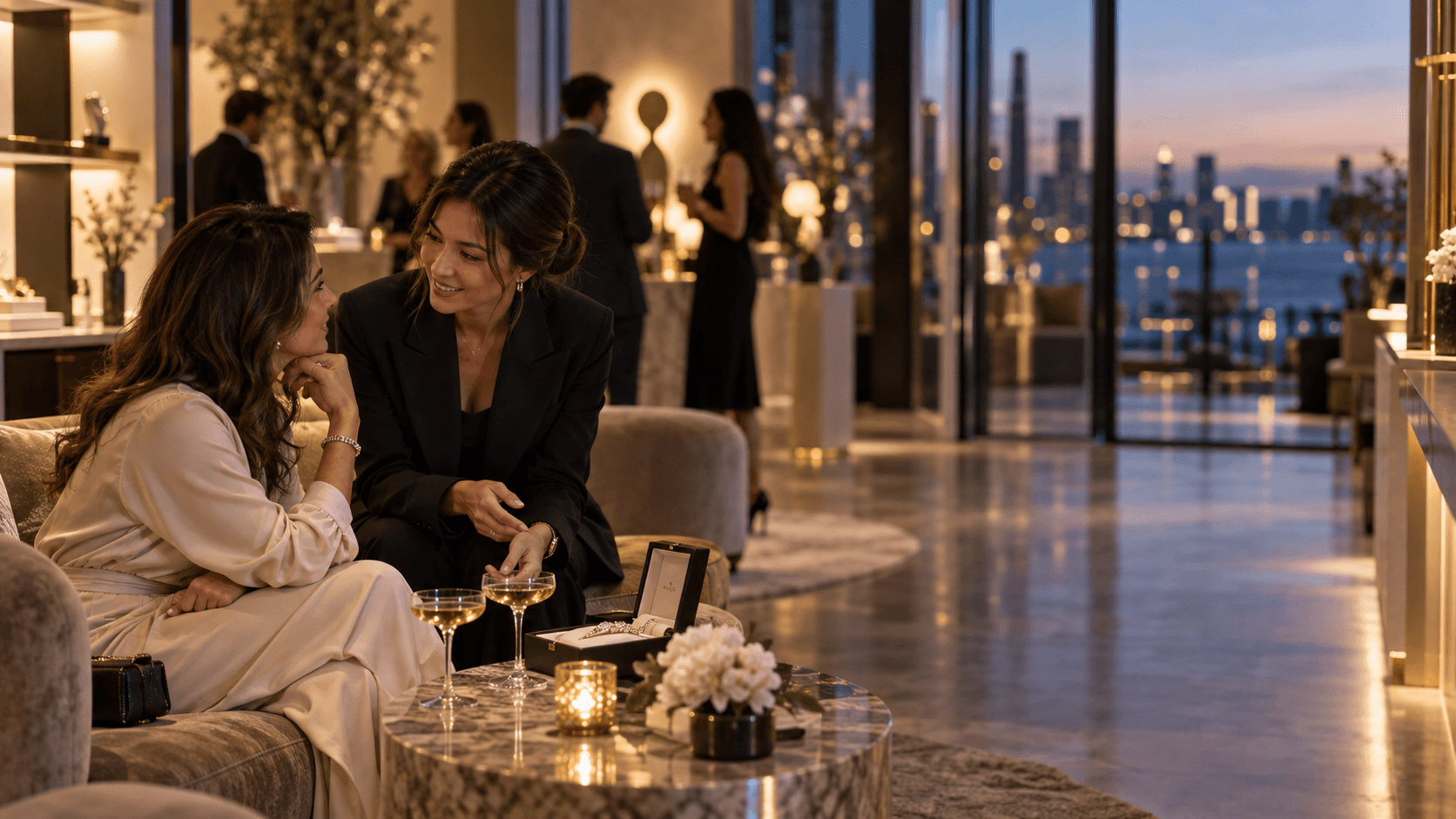
Iconic luxury brands invest in physical retail as a primary expression of their identity. The materials used in construction, the lighting levels, the scent, the sound, all of these are intentional signals. The store is not just a place to sell; it is a place to experience what the brand believes.
When a client enters a space that feels like the brand’s values made physical, they slow down. They look differently. They ask different questions.
The environment itself becomes part of the reason they choose to stay.
Product Presentation Is a Curatorial Act
In the highest-tier boutiques, the decision about what to show a specific client, in what order, and in what context, is a skilled act. Associates who know their clients don’t open a drawer and pull out everything. They select, and the selection tells the client that the associate has thought about them.
This curatorial approach extends to digital outreach. When an associate sends a curated selection of products to a client in advance of a visit, or follows up with a specific recommendation after one, the message is: I thought of you specifically.
Heritage Storytelling Makes Products Memorable
When a client understands the origin of a technique, the reason a color was chosen, or the way a collection connects to the house’s archive, they hold the product differently. The story changes the experience of ownership, and the likelihood that they will share it.
Associates trained in brand heritage are not just knowledgeable; they are storytellers. The best ones can connect a specific product to a specific moment in the brand’s history in a way that makes the client feel like they are acquiring a piece of something larger than a single season.
The discussion of how chanel louis vuitton dior and gucci create signature luxury store also connects with Inside the Luxury Boutique: What to Expect From Appointments, Styling, and the In-Store Experience.
Personalization at the House Level
Monogramming and Customization Deepen Attachment
The ability to personalize a product, to add initials, to choose a bespoke detail, to commission something that didn’t exist before, creates a level of attachment that no off-the-shelf item can replicate. The client who commissioned something owns something that nobody else in the world has exactly.
This custom dimension of luxury is expanding. Clients who have experienced the customization process become advocates, they return for it specifically, and they describe it to others. It is one of the most effective forms of both retention and word-of-mouth.
Client Events Tied to Heritage Create Exclusive Access
A private preview of an archive, an exclusive dinner tied to a craft tradition, a behind-the-scenes look at a production facility, these events create emotional memories that products alone cannot. Clients who attend them don’t just feel appreciated; they feel initiated into something.
The most memorable luxury brand events connect the client to the brand’s larger story. They are not sales occasions; they are relationship occasions. The sales follow naturally from the relationship.
For another perspective relevant to how chanel louis vuitton dior and gucci create signature luxury store, read Luxury Retail Strategies.
Retail teams working on how chanel louis vuitton dior and gucci create signature luxury store may also find What Is Luxury Customer Experience? useful.
As a companion to how chanel louis vuitton dior and gucci create signature luxury store, BSPK’s What Sets Luxury Beauty Retail Apart: In-Store Experience, New Formats, and Brand Launch Support explores a related retail consideration.
How BSPK Can Help
In this context: Delivering a signature experience, consistently, across every location, at every price point, requires that every associate carries the right information into every interaction. BSPK makes that possible by turning individual client knowledge into brand intelligence. BSPK is built for the AI era of retail.
Frequently Asked Questions
How do iconic luxury brands train their associates?
Leading luxury houses invest heavily in heritage education, product knowledge, and relationship-building skills. Associates are trained not just to describe products but to connect them to the brand’s story, and to listen carefully enough to make each client feel that the recommendation was made specifically for them.
What makes an in-store luxury experience memorable?
Preparation, personalization, and follow-through. The most memorable experiences happen when the client arrives, and the associate already knows them, what they’ve bought, what they’ve been looking for, and what they enjoy. That preparation communicates respect, and respect is the foundation of any relationship.
How do luxury brands handle clients who visit different locations?
The best brands maintain client profiles that travel with the client across locations. When a client visits a boutique in a city they don’t usually shop in, the best service happens when that location can access their history and preferences, eliminating the need to start over.
What role does heritage play in the luxury in-store experience?
Heritage functions as a service language. Associates who can connect a product to the brand’s history give clients a story to own alongside the object. That story deepens attachment, provides a rationale for the price, and becomes something the client shares, expanding the brand’s reach through the people who care about it most.
How do luxury brands use events to build client loyalty?
Luxury events create emotional memories that outlast any product. Private previews, heritage dinners, and exclusive-access experiences tell clients they belong in the brand’s inner circle. Clients who feel a sense of belonging remain loyal and introduce others to the brand’s world.
Next Steps
If your brand delivers exceptional service in some locations but not consistently across all of them, BSPK can help you close that gap. Client knowledge is captured in one boutique travel with the client, so every visit feels prepared.
Learn more about clienteling.

Similar posts
Emotional Connection With Customers: How Luxury Experiential Marketing Builds Brand Loyalty
By
Paul Andre de Vera
Luxury Retail & Customer Experience

What Sets Luxury Beauty Retail Apart: In-Store Experience, New Formats, and Brand Launch Support
By
Paul Andre de Vera
Luxury Retail & Customer Experience
How Chanel, Louis Vuitton, Dior, and Gucci Create Signature Luxury Store Experiences
By
Paul Andre de Vera
Luxury Retail & Customer Experience

Inside the Luxury Boutique: What to Expect From Appointments, Styling, and the In-Store Experience
By
Paul Andre de Vera
Luxury Retail & Customer Experience
